

The Past Presents: Joseph Lamar
Interviewed & Edited by Dia Masuda in 2023.
The Past Presents is a series highlighting artists from the denver undrgound magazine, Worldview’s predecessor. These are Xadie’s words directly from the conversation.
Challenging Overprotected Paradigms:
It’s necessary for us to push back against certain cherished, overprotected paradigms, belief systems and ways of being, especially ones that try to fix us in certain roles or molds. It’s important to have boundaries with the world, just like a person needs to have physical and emotional boundaries. The awareness, respect and communication of those boundaries is what allows for greater intimacy, freedom, wellness and wholeness. In those same ways, spiritual and intellectual boundaries are a necessity.
I see indoctrination as a violation of someone’s intellectual and/or spiritual boundaries, especially when it comes to children because you are attempting to kind of usurp someone’s ability to think for themselves before they really hone that ability to feel or think for themselves, to find what resonates with them spiritually. That’s something that only a person can do for themselves, no one can really do that for them. The role of spiritualities and religions is not to be some sort of immovable, permanent force that can’t be challenged or questioned and must be accepted at face value and taken very literally and played out literally in one’s life. They should actually be more like suggestions. They should help people to gain a sense of what their respective way is. If it doesn’t serve that purpose, that’s when it crosses that boundary.
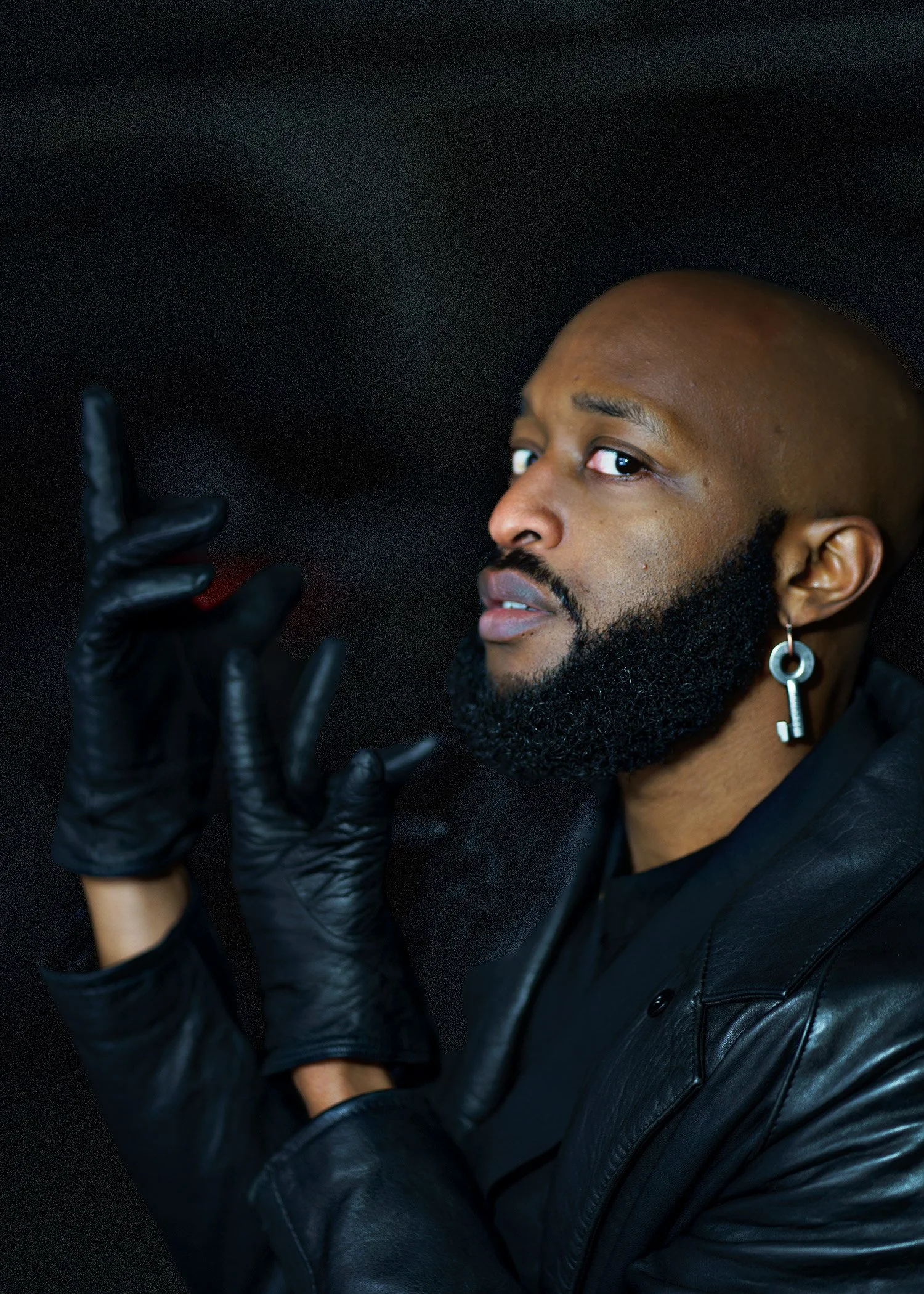
So yes, I do and I will push back against those things. We tend toward the familiar. Sometimes—a lot of times—we’ll even choose what is fucked up but familiar over what is unknown and better. That void is just full of uncertainty. One of the roles that I think religion can play, and it shouldn’t, is trying to fill up that void with some sort of false certainty so that people can feel better and don’t have to confront the parts of themselves and others and of life that are difficult to understand and deal with. But facing and grappling with those things is actually a very necessary part of the process of living well. Also being able to die well. The two are connected.
(photo by Jackson Davis @jacksondavis13)
I felt that even though I’d left the church, the mindset stayed with me that I needed to have this god that was above me, determining my fate, that would punish me for anything I did that wasn’t good enough, and that had determined that, in a sense, I just wasn’t good enough. So I removed that god and replaced it with other gods, but had the same relationship. The relationship didn’t change, it was just what it looked like or what you call it.
The connections we have with ourselves and with others give us that feeling of divinity. It can be a sense of heaven.
A Series of Closets:
I think a lot of us were mistaken in thinking that coming out of the closet is a single event. There’s this whole, “Come out of the closet. It gets better-” thing, which on one level is over-simplifying and maybe potentially complicating things for somebody. It’s more complex than it’s made to sound because the closet is more meta than that. It’s a series of closets. I’ve been in the process of becoming queer—this process of evolution—this process of opening many closet doors.
I used to think that there was an assumed queerness in being gay. That’s not the case. Queerness is a state of mind and a way of being in which you exist in your life and in spaces in a way that sort of defies binaries and external categorization. It’s about you existing in the way that’s right for you, regardless of what the status quo is. Queerness has to do with really unlearning these attitudes that you have to show up in a space in a certain way for the sake of pleasing or appeasing others or passing under other peoples’ radar. So with that definition, it’s more than just sexuality or gender. There’s a whole realm of what people hide from others, ways that we’re lying in our presentation. We all are, in some way, closeted.
Sometimes there will be chaos, and sometimes people need that, even if they don’t realize they need that. I’ve experienced both being the person afraid to touch anything and also being the person who was anxious about my own tables being bumped, and those of others. I thought part of my responsibility as a human was to tiptoe around everything for my safety and my comfort, and also to not inhibit the safety and comfort of others. That’s what I thought. Then I’ve just been in the process of unlearning that in my whole life and how I show up…
READ THE FULL STORY IN TDU’S ‘OTHERHOOD: QUEER CONVERSATIONS’
