

The Past Presents: Semilla Besada
Interviewed & Edited by Dia Masuda in 2023.
The Past Presents is a series highlighting artists from the denver undergound magazine, Worldview’s predecessor. These are some of Semi’s words directly from the conversation.
I’ve been in the process of dreaming and making new pieces. The pieces I chose here had a common thread that I seem to come back to in terms of identity and connecting to the land; these lands in which I’m residing in and have been for over 16 years now and I feel very held by, and then the more distant but very visceral connection with homelands where my family is from. It’s been subject matter that I’ve been called by from a young age and didn’t know just how prominent it was until I got back and reflected on work that I’ve created, thinking that they’re seemingly separate and not a united body of work, which isn’t the case at all. They have a relationship to who I am in the moment that, I feel, gives them a sense of separation from each other, but it’s like a passing of time in a nonlinear way because I keep circling and spiraling back around to the same themes over and over again, but maybe exploring different dimensions of them each time.
The creation of art in general is self-indulgent. I’m just trying to make sense of it all to the best of my ability. Creative process helps me acknowledge the pieces that are floating around. I get to give them a place and an expression.
De Aquí y de Allá:
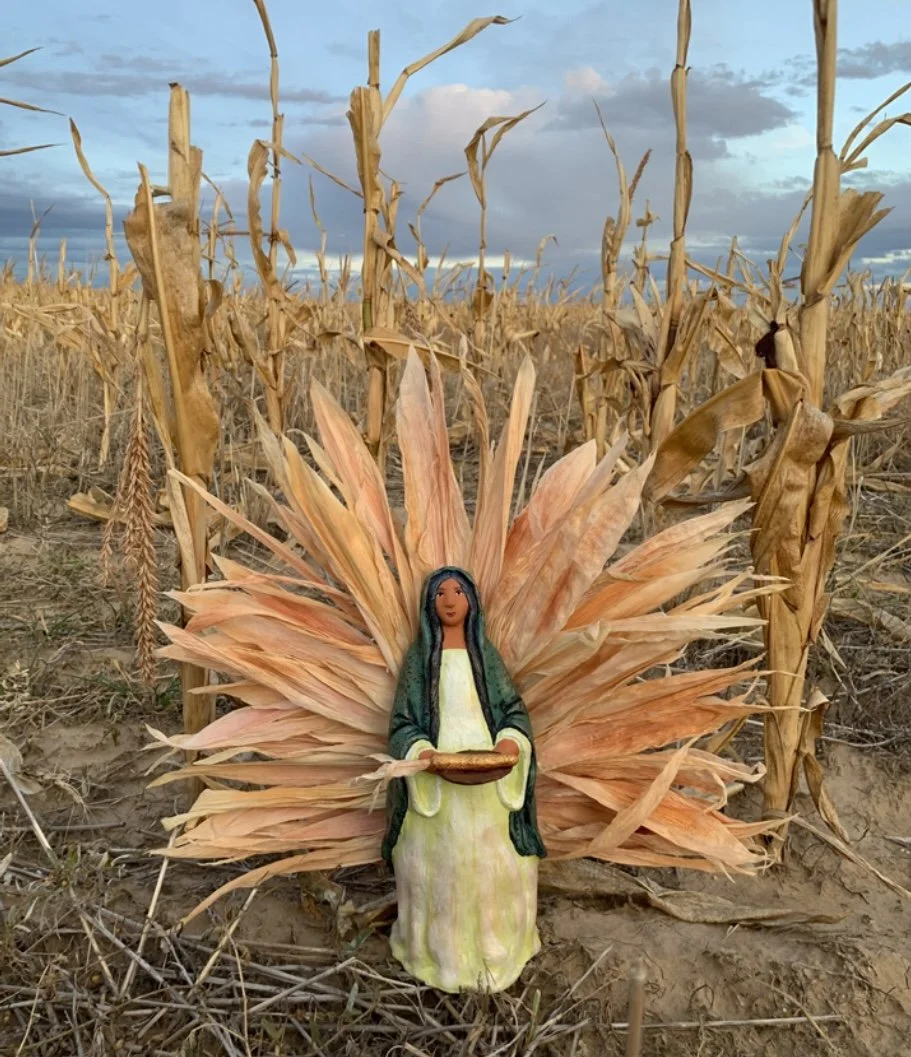
Growing up and from a young age, learning that, in our cultural and societal context, I’m perceived as a very racially and ethnically ambiguous person, I had a sense of liminality that I didn’t really know what to do with in terms of finding a space of belonging.
My cultural upbringing was starkly different from my parents, just one generation back. The teachings were very distinct from what I’m steeped in currently and the context that I was brought into when my parents decided to move to the United States.
Holding multiple identities at the same time, I have taken the time to sit with each one. Some labels make me feel a bit more tumultuous internally than the others, like Hispanic. I had a reckoning with that one, in terms of the centering of European heritage.
Then I found myself too far on the spectrum of trying to separate from that part of myself. It’s a piece of myself. I can’t dissect and pick and choose. It’s all-encompassing, really. And when approached with enough detachment and compassion, I realize that our language reflects the way that we perceive the world. “Mother” I’m just grateful and curious enough to continue expanding my vocabulary and leaving behind what no longer serves me and others, and [to] try to reach a point of equity, which is an ongoing journey. But absolutely, my embodiment of my brownness is inherent to my queerness and my queerness is inherent to my brownness.
So, with my more recent work, I feel that there’s been more of an emphasis on re-indigenizing my sense of place and belonging, regardless of where I am, and not necessarily having to know my whole family history or explicit details of pieces of my heritage to know that I’m a person from the earth, and I have a responsibility of stewardship and to just do the best that I can to be able to share that with other people.
So that’s how I kind of got to the expressions of Madre Maiz as kind of a combination of these universal archetypes of the mother that shows itself in Catholicism with La Virgen, Maria, and the life-giving plantcestor that is corn. That is universal throughout the most northern to the most southern parts of what we know as the Americas– and kind of giving it a new face, which isn’t really new, it’s just recycled. I find myself yearning a lot for the things that were burned and destroyed. That does then create an impulse to create. It’s a process to go about with a lot of humility because it doesn’t change the reality. Even though I feel it’s my right to have access, I don’t want to feel like I’m indebted.
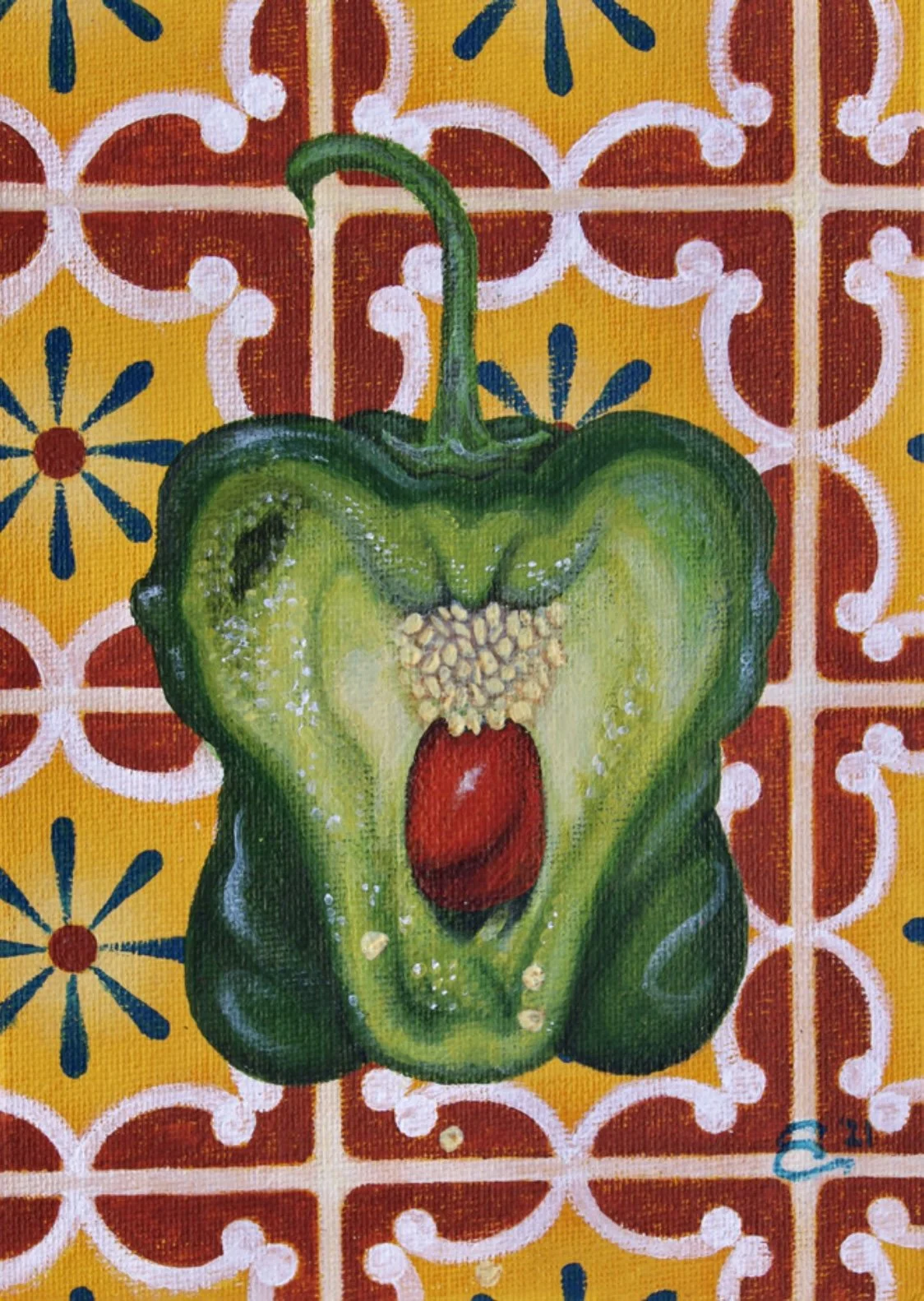
My use of Catholicism in my work is one that is a process of reclamation because of how much it had dominated historically.
I like bringing in those visuals as an acknowledgement of its presence and also a manipulation of the image to have it hold the fact that what it was stifling could not, in the end, be completely dominated and that it just kind of merged together. I really like combining it with very earthly elements because I do firmly believe that the elements are something that cannot be dominated and they can’t dominate each other. And maybe in certain combinations, they create new things that weren’t formerly there.
I really believe that those Catholic symbols were also a conduit for indigenous deities and beings of the earth to continue to flourish and be accessible to the people that they were there to support in the first place. Even if they were imposed and taken on involuntarily, there was still some form of will in the making of that.
The peppers are also a reflection of acknowledging the mirrors that plants are to us as living and breathing bodies that also need to consume and be consumed at some point, to be budding and blooming and decaying and all of it, just in different parts of a cycle. Tapping into the context that I was living in at the time, where I had relocated to northern New Mexico in Taos for a few months as I was studying herbalism, taking in all of the aesthetic culture that is very present in the space, and interpreting it in a way of: this pepper is as much of a person as I am. We’re just different expressions of each other. And trying to see how they overlap, where the line is. It’s quite blurred. It’s all cyclical.
There’s this saying, “Ni de aquí, ni de allá.” Not from here nor there. I’m trying to reframe it, “de aquí y de allá,” from here and from there. That’s how I feel. My experience becomes a lot more rich when I’m able to find pieces of myself reflected in the most unexpected places, as well as the ones where I do go into it knowing that I’ll be met with a sense of familiarity. The concept of mestizaje being at first essentially a caste system, and being able to own all sides of the narrative is a form of accountability personally and interpersonally.
I’m not doing any service to myself or to my community by trying to overidentify with one side of my lineage and not the other. I don’t think it does any justice for my ancestors either because that is the way that they were in relationship to one another, that very real and tangible history that I’m a manifestation of. I literally wouldn’t be here had they not been in relationship to each other in both really light and dark ways. So my identity work is definitely one of reconciliation and a reclamation of my right to be here in the first place, and the commitment to sovereignty, and how that is really interconnected with my actions, what I do for myself and other people.
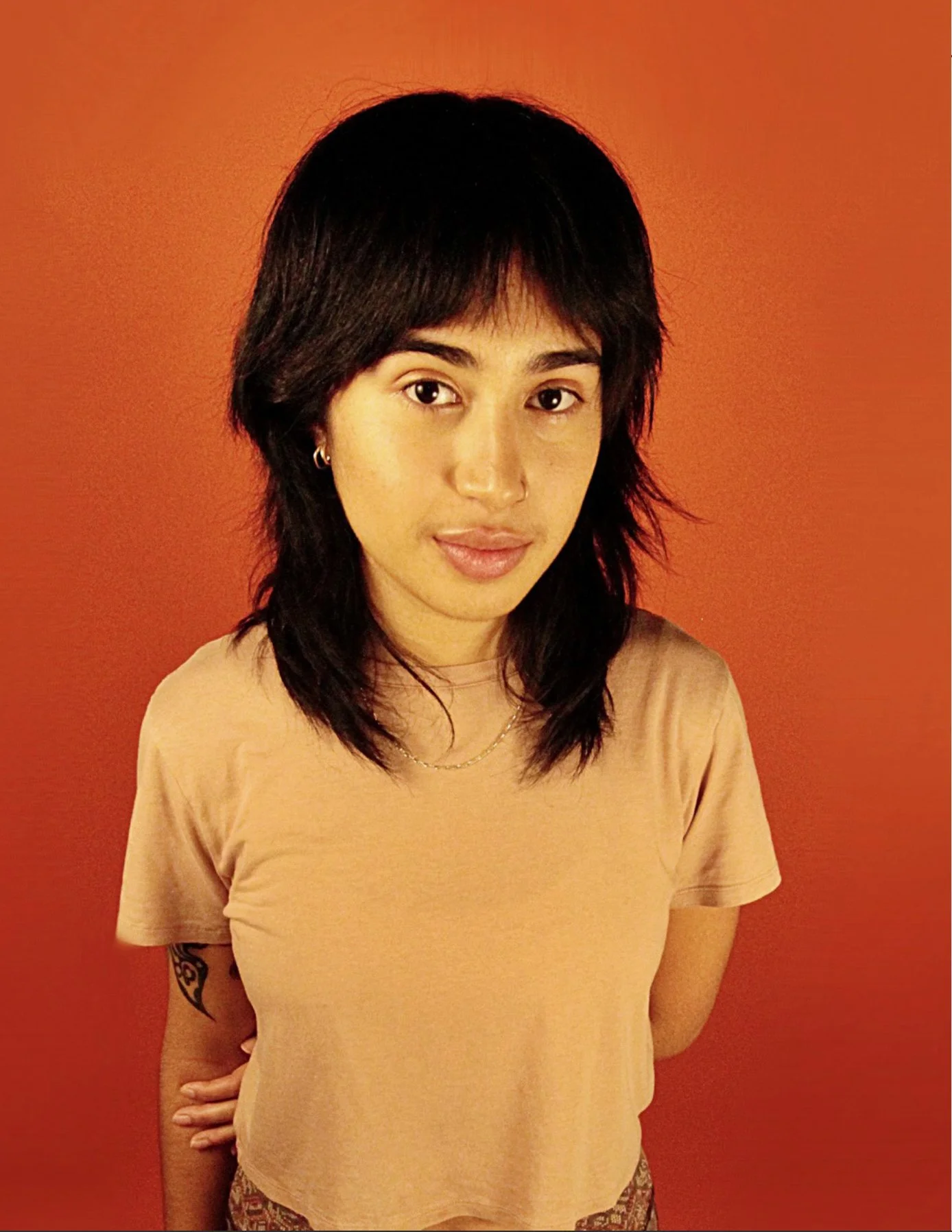
‘My identity work is definitely one of reconciliation and a reclamation of my right to be here in the first place.’
~Semilla Besada
