

Written by Tommy Clift
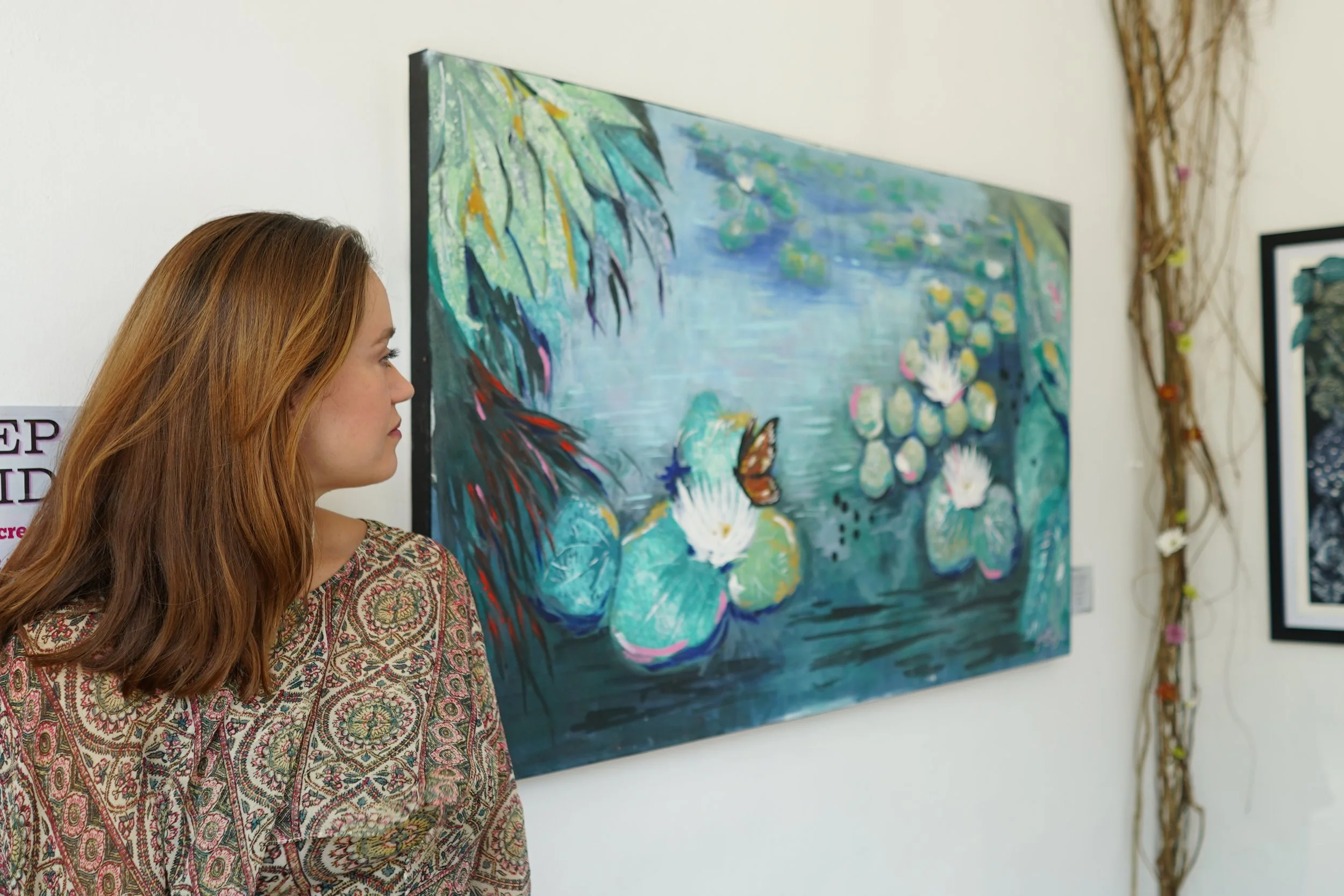
“You are portraying something the way you feel, not the way you see it.”
Lately, I’ve found myself reciting this little refrain: “I am a feeling mind, not a productive one.”
Not to say I can’t be productive. At some point we all have to be. But it surely isn’t what we’re here for, even if our days often feel shaped like it is. So, particularly when I’m struggling to embody this idea—in the middle of multitasking or in some rush seemingly prescribed by my surroundings—I try to remember: of senses and sensations, not of outcomes.
Many gifts that come with being alive today—from convenience to communication—arrive tethered to systems obssessed with outcomes. These tortuous, telic loops seem to grow more impatient with each new technology meant to make life easier. Even as I write this—something I find joy in doing—I’m guided by a kind of finish line afforded to me by the luxuries of online work.
Art can provide an off-ramp. It can center us in curiosity and feeling. It can guide the expression of a body tied to senses and sensations just as much as it can comment on that reality. But the industries that surround creativity are often just as preoccupied with finish lines—those bottom-dollar, data-driven outcomes—as any other. For a touring musician making a new record under label pressures, this is a challenge. For someone simply finding themselves disconnected from their creativity, it’s a tragedy.
The more pervasively felt these forces for measured success are, the harder it can be for anyone to create just to create—unshackled from shame and unbeholden to any metric that deems the whole process worthwhile.
Sitting down with Ana Beij, I peered into a pocket of the world that tended to this dissonance. Ana is a versatile visual artist who, for the past several years, has hosted creative retreats for women—spaces built, in part, to loosen the inner critic’s grip that so often paralyzes process in the name of getting it right. Even in the paradisal sunshine of Bali, where she often hosts her retreats, her guests would come to her afraid of the end result being “ugly.” They did not think of themselves as artists, so in their eyes, they did not know how to make art.
"This is not for anybody else,” she’d tell them. “We're not trying to sell this. This is for ourselves; it's for our own enjoyment, for our own benefit. We're enjoying the process of creating.”
So engrossed in digital worlds, perhaps we’re just more aware of ‘everybody else’—all they’re thinking and all they appear to be doing. To unlatch from that—how we or what we create will be received—seems to grow more challenging and all the more necessary. Editor Karen Rinaldi describes this as a “freedom to pursue the futile.”
What starts as anxiety-inducing can become freeing: an energizing breath from doing or making something even when—if not especially when—it’s ‘bad.’ And more often than not, it’s our own uninvited critic that’s far worse than the actual art.
“If you ask a group of kids if they’re artists, they most likely will say yes, because they don't have that inhibition or they weren't taught that they have to make good art. They just make art,” reflected Ana. “But if you ask a group of adults if they’re artists, maybe one will raise their hand, because we are scared of using this word art.”
That fear, she thinks, is often thanks to the way money and the worry of how we’re perceived erode and domesticate the pure curiosity of creativity.
“Art, it’s just a natural thing that you create. It doesn’t have to be good or bad. You can incorporate art into basically everything that you do in your life.”
It’s such a focal point in Ana’s life not because she’s always been ‘an artist’ or because of some calling she simply couldn’t ignore. She chose to keep coming back to it. When life seemed laid out, she reconnected with it and stayed in touch—letting it shape her relationship to herself, the world she traveled, and the people she met.
Laws, Lennon, and Lessons in Listening
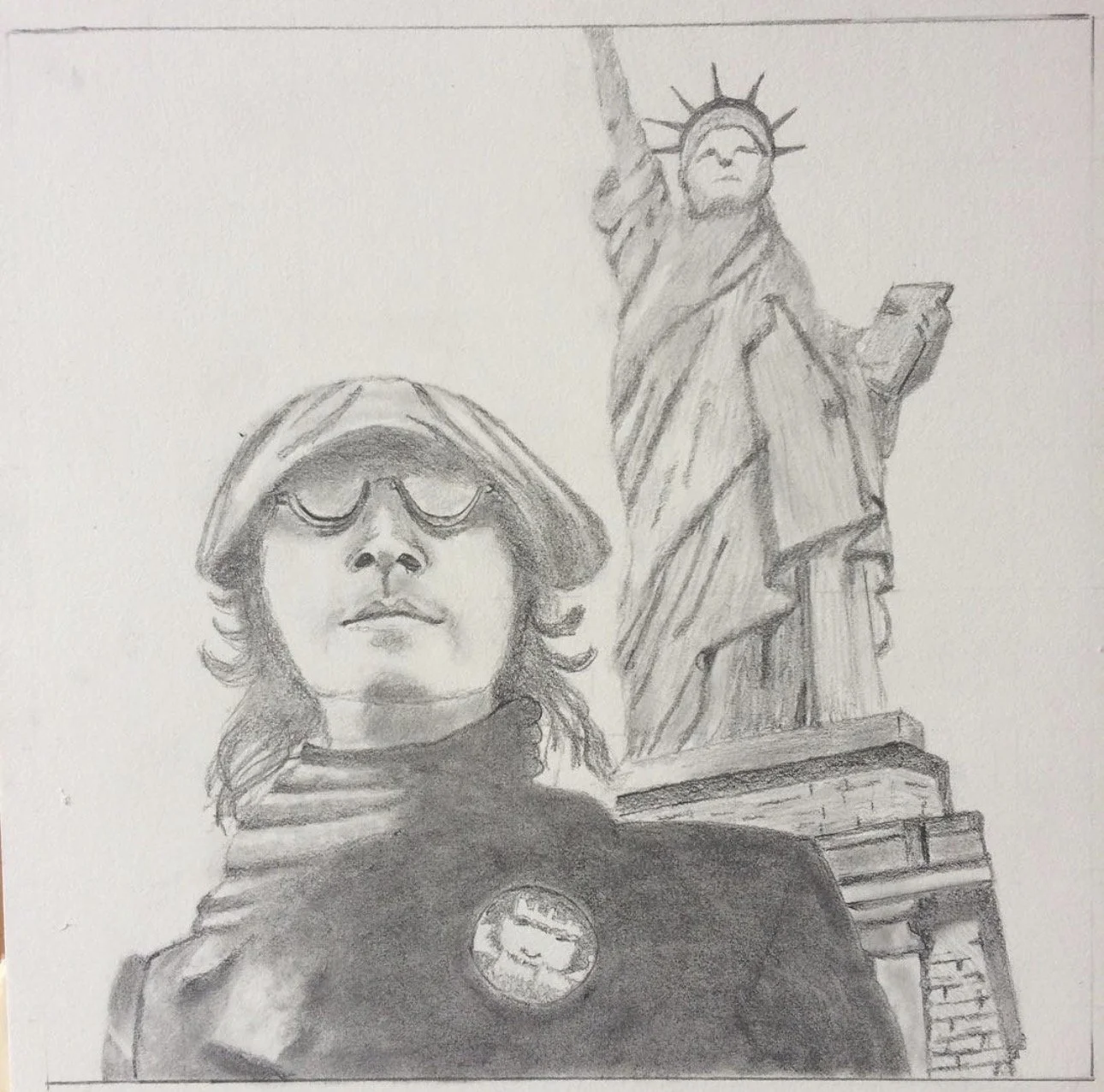
Lying down in a one-bedroom apartment—boxed in by the law books she was meant to be studyingAna began to sketch the face of John Lennon.
She didn’t particularly know why. She’d grabbed a photo of him online and suddenly had a pencil to paper—like when she was a young girl cutting out her crushes from magazines and sketching their likeness.
“It came back to me,” she said. “All that passion that I had before and the love that I had for drawing and for art.”
Growing up in a small town in southern Brazil, Ana learned graphite portraiture from her father, “looking at the shadows instead of the shapes, and finding the proportions in a picture.”
But he never viewed art as a career—so neither did she. After high school, strong test-taking gave her options, and she assessed the future on the merits of sense and security—an easy bearing for her family to support.
"But I was so unhappy, so unhappy about studying law,” Ana recalled. “I did not connect with it.”
The portrait of the late legend became a sudden rupture in the trajectory she’d already been struggling with. Within a year, she was working as an au pair with a host family in Corte Madera, California—her first time to step outside of Brazil. Everything, she said, was “very foreign in a literal and non-literal sense.”
There, drawing became more than a recovered memory. While living with her host family, Ana began studying drawing and graphic design, then spent several years teaching art to teams in Silicon Valley. Carrying supplies into offices and setting up temporary studios for team-building events—a “different way to do the paint and sip.” It didn’t give her the creative latitude she has now, but it “planted the seeds” for her work hosting retreats. Even when the pandemic emptied those offices, she kept going from living rooms, mailing supplies to people’s homes and teaching over video.
When the world reopened, Ana and her husband set off traveling 25 countries. “It was my dream since I was a kid,” Ana said of exploring the globe.
On their stop in Bali, they planned to stay for a few weeks before moving on to Australia, New Zealand, and Tahiti. They stayed for nearly three months.
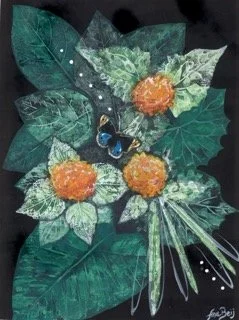
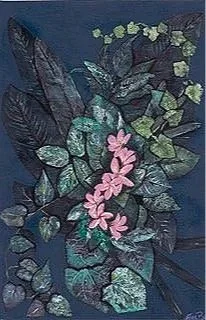
While her husband surfed elsewhere in Indonesia, Ana stayed in Ubud, finding herself deeply inspired by Bali’s landscape—the falling leaves became textured impressions she’d build from in her paintings. “I love using nature in my art,” she explained. “I’ve always connected a lot with nature, and using nature in my art is a way for me to connect with the place.”
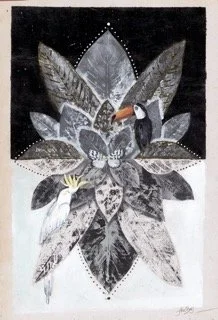
After their global excursion, Ana and her husband moved to Austin, Texas, where they live now. Ana always imagined after traversing the globe, she would lock herself in her studio and just make art. “This was the dream, right? Every artist wants to be in their studio making art all day, every day. That's what they want to do,” Ana told herself. “That’s what I want to do.”
Her studio remains one of her favorite places in the world—a sanctuary. “I am an introvert by nature, so I thought, that’s what every introvert wants.” But disappearing into her craft wasn’t the pure creative bliss she’d pictured. “I felt that missing piece of connecting with people, working with people. I think I am a teacher at heart.”
The idea of creating women’s retreats had already been circling the back of her mind throughout her travels. Her isolation in the studio helped solidify it into a concrete plan. Initially, she advertised to ‘creative women’ interested in joining her trips. Unexpectedly, she found that women going through major transitions—often during midlife—were gravitating towards the retreats more than anyone.
“So I started talking to them, and I started to learn so much about this phase in life,” Ana recounted. “They’ve spent their whole lives taking care of their family, being so devoted to their family, and then the kids leave, or sometimes they go through a divorce, or their husband passes away, and they don't know who they are anymore.”
Many of these women arrive unmoored by loss, change, and bare selfhood—Ana has seen that art without a buyer can be a medicine and a compass. And the Bali backdrop doesn’t hurt.
“They're hoping that their art, their creativity, and this community of women, this experience will bring them more clarity for what they do next in their life.”
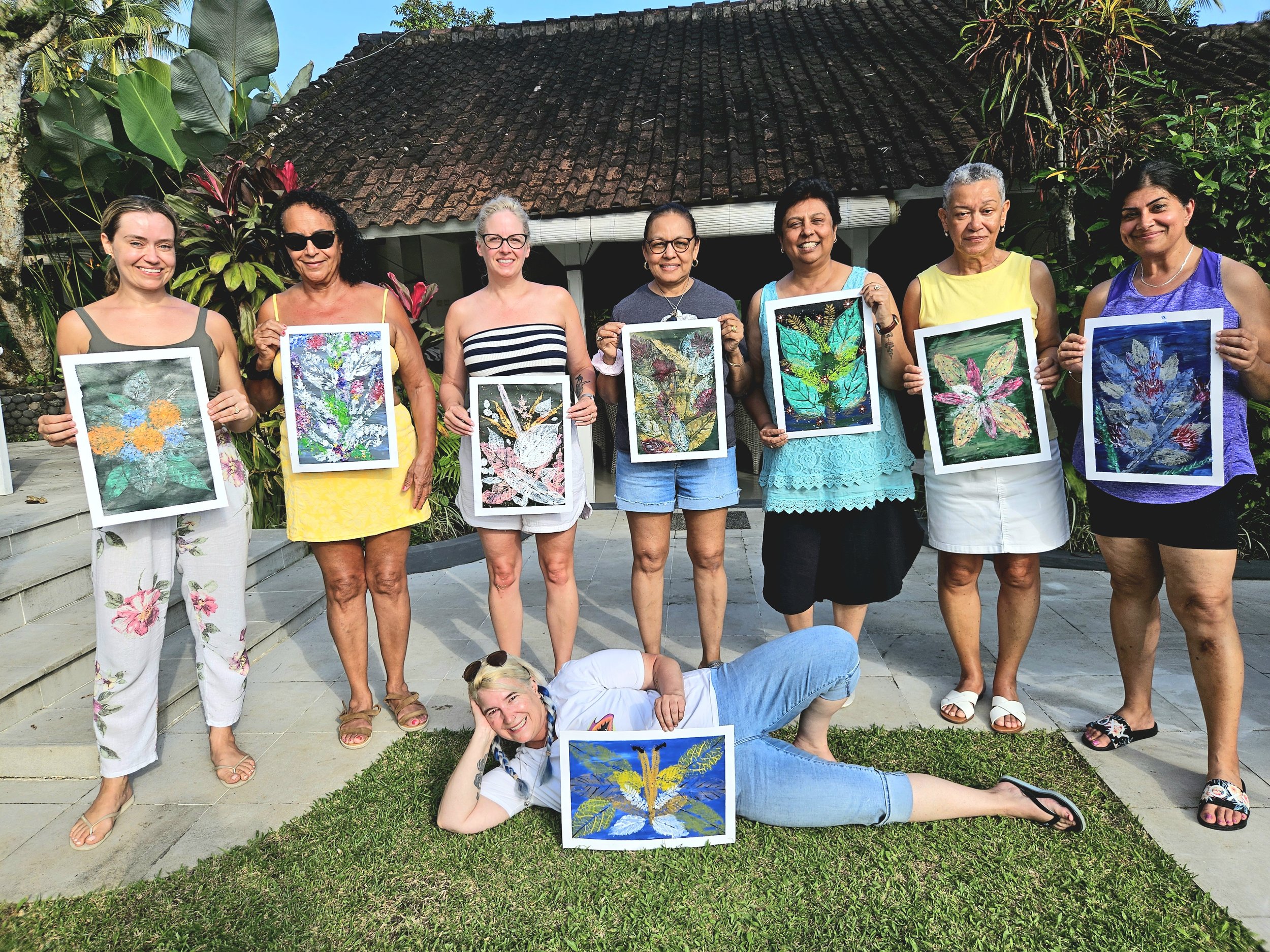
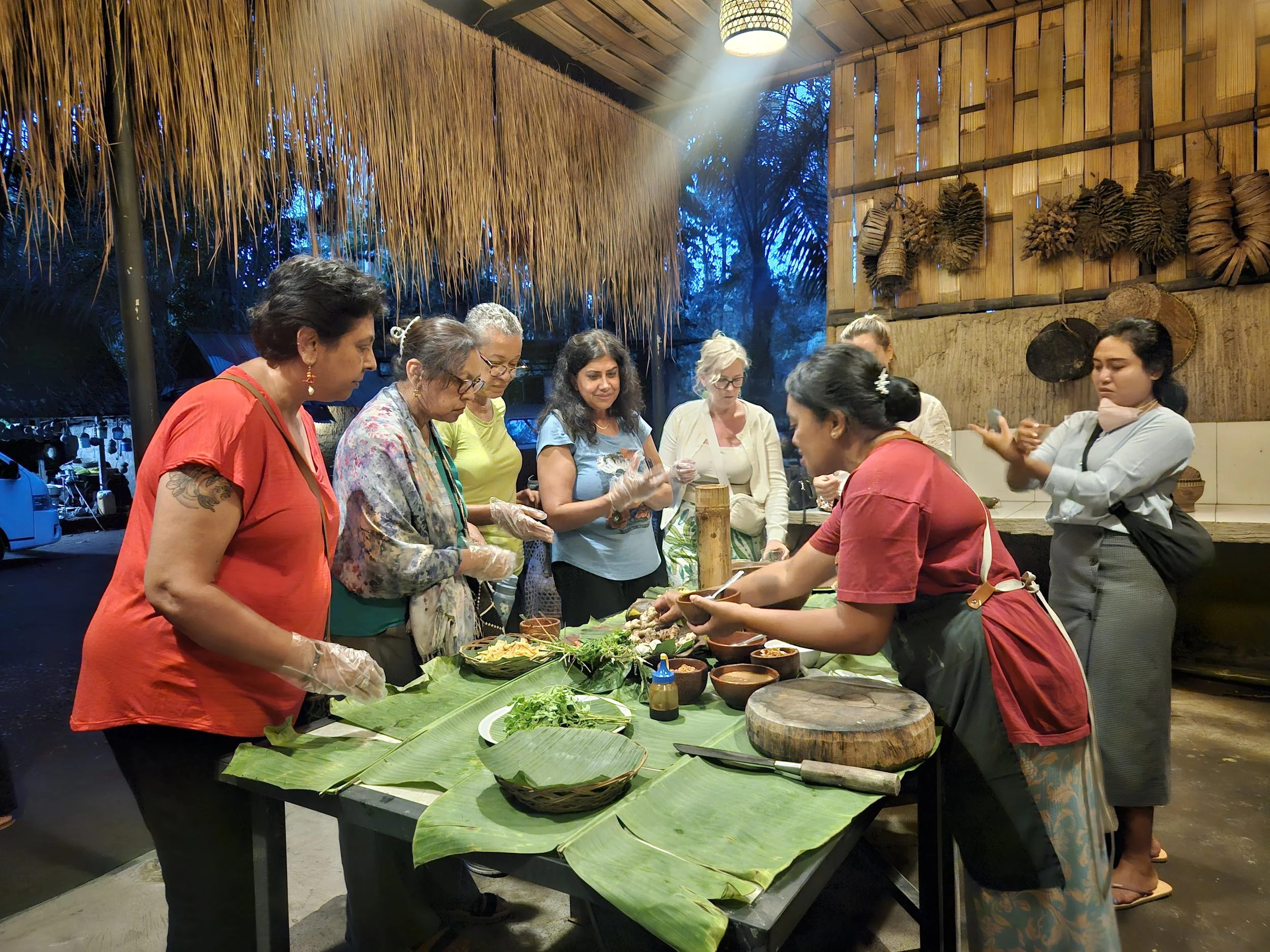
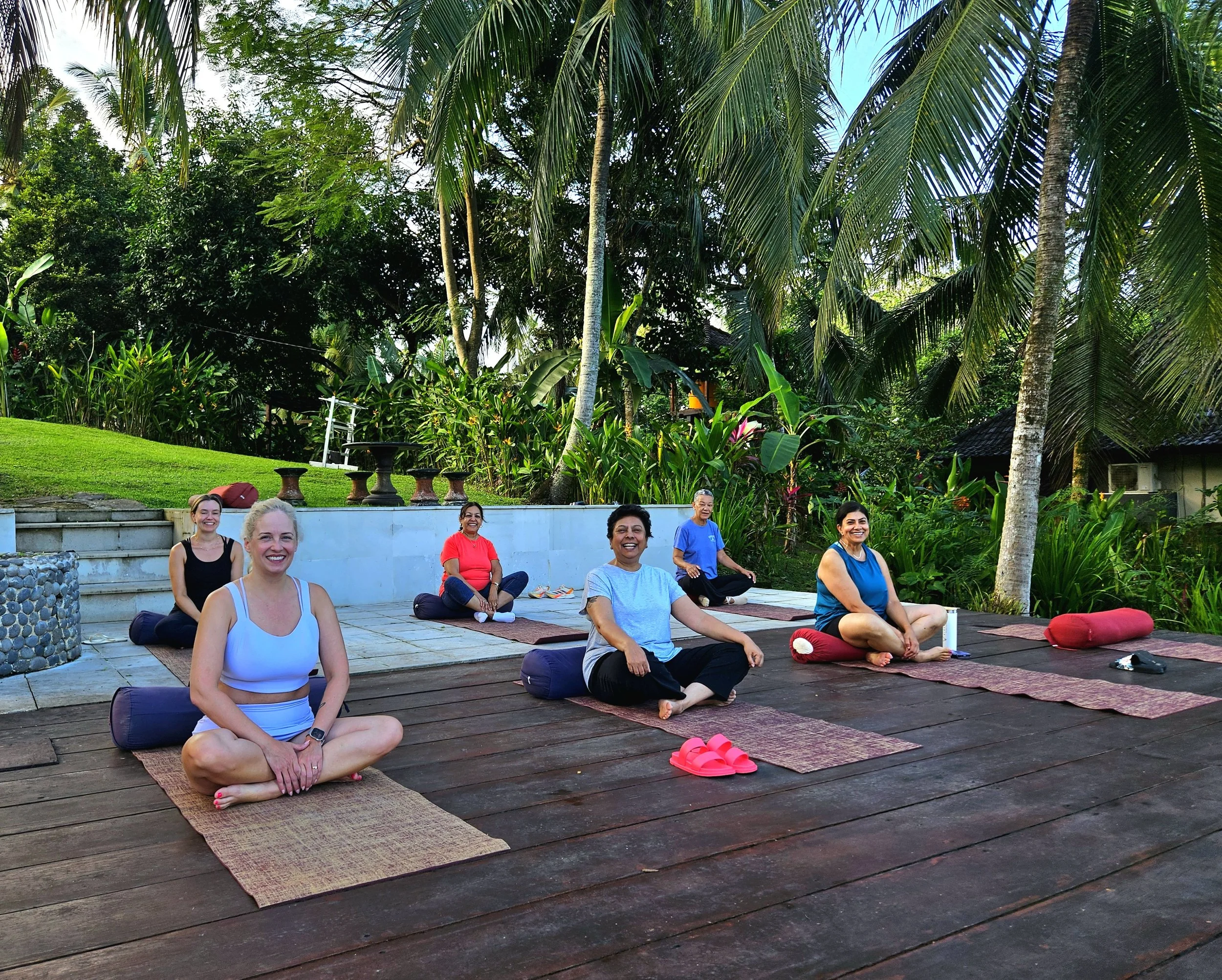
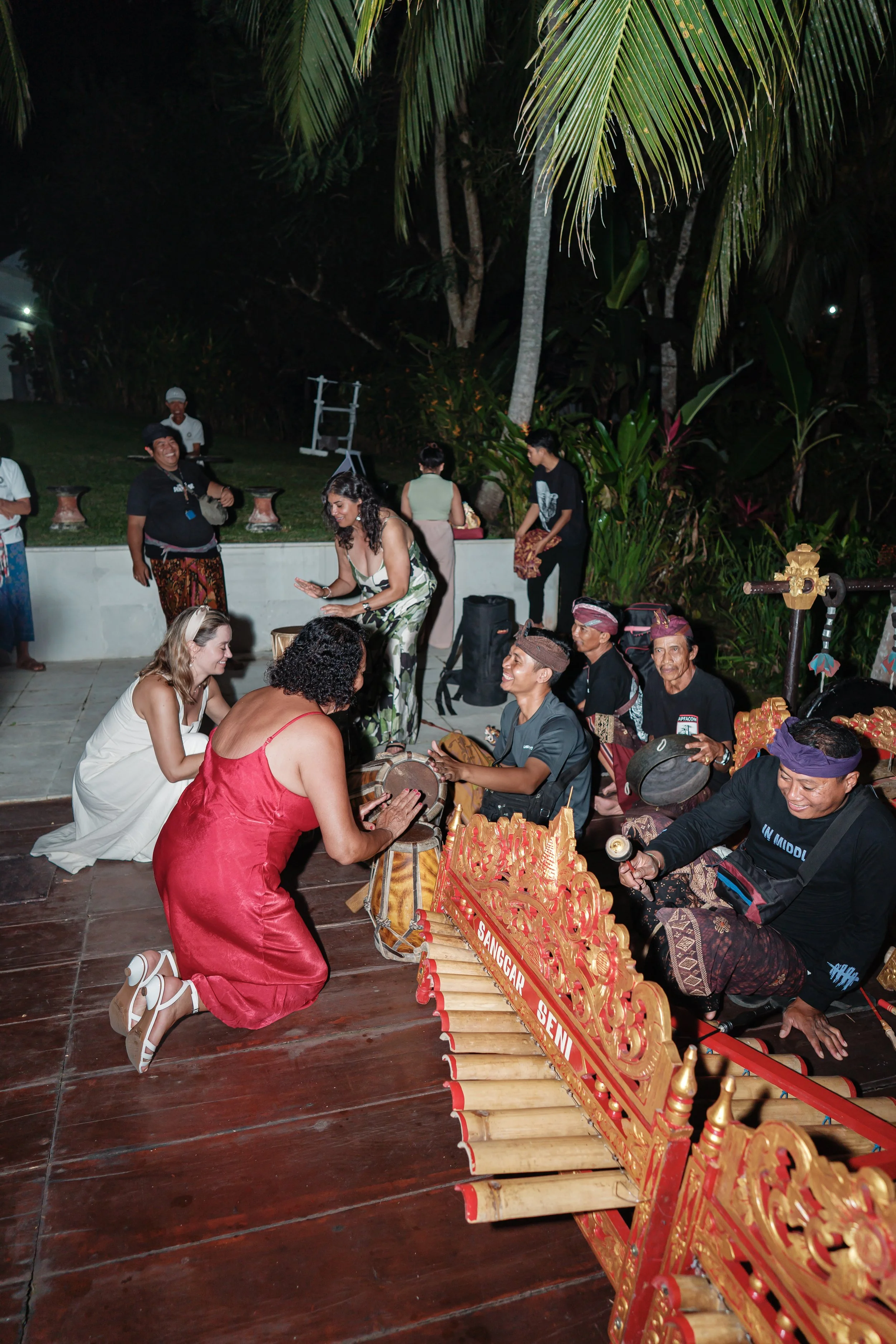
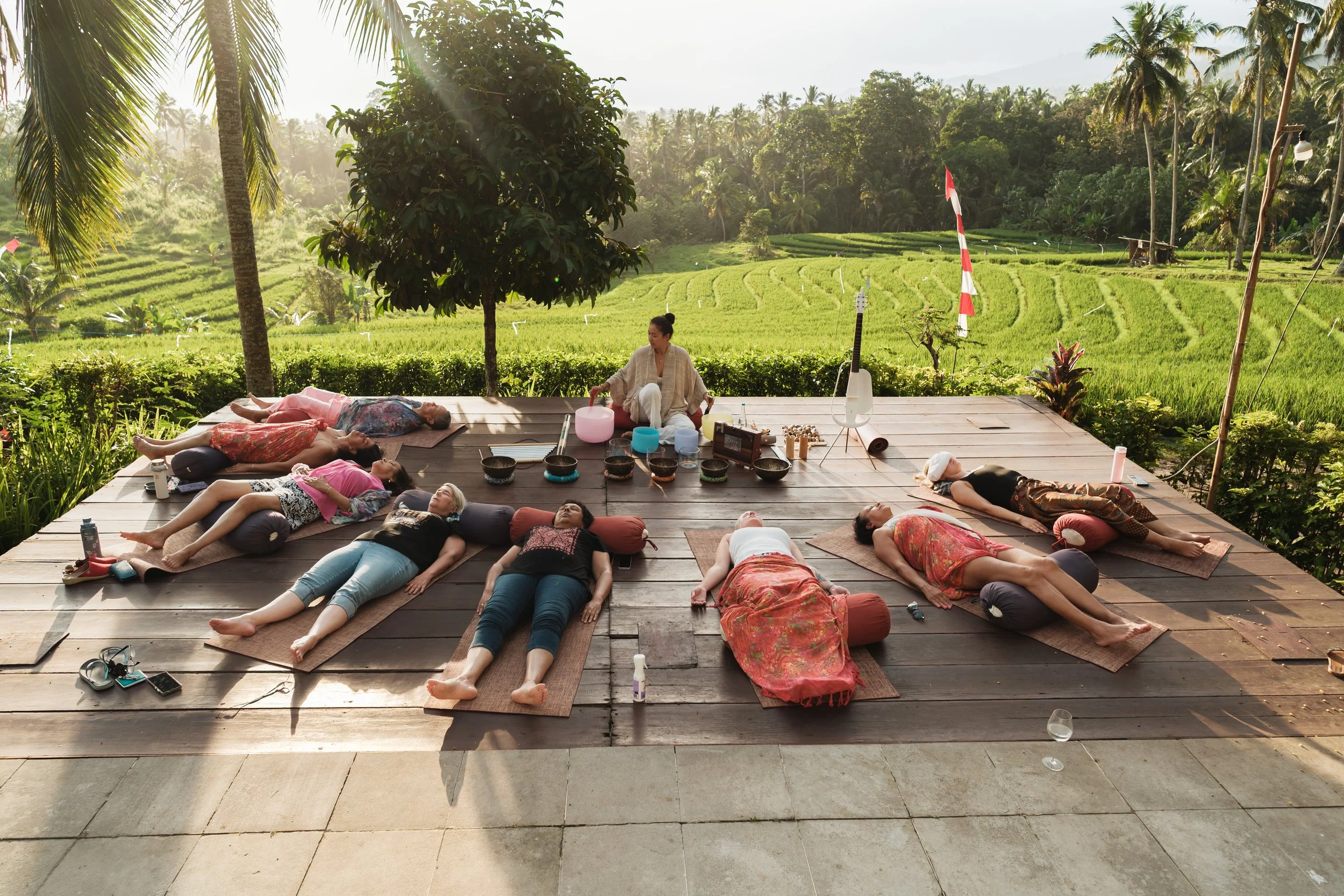
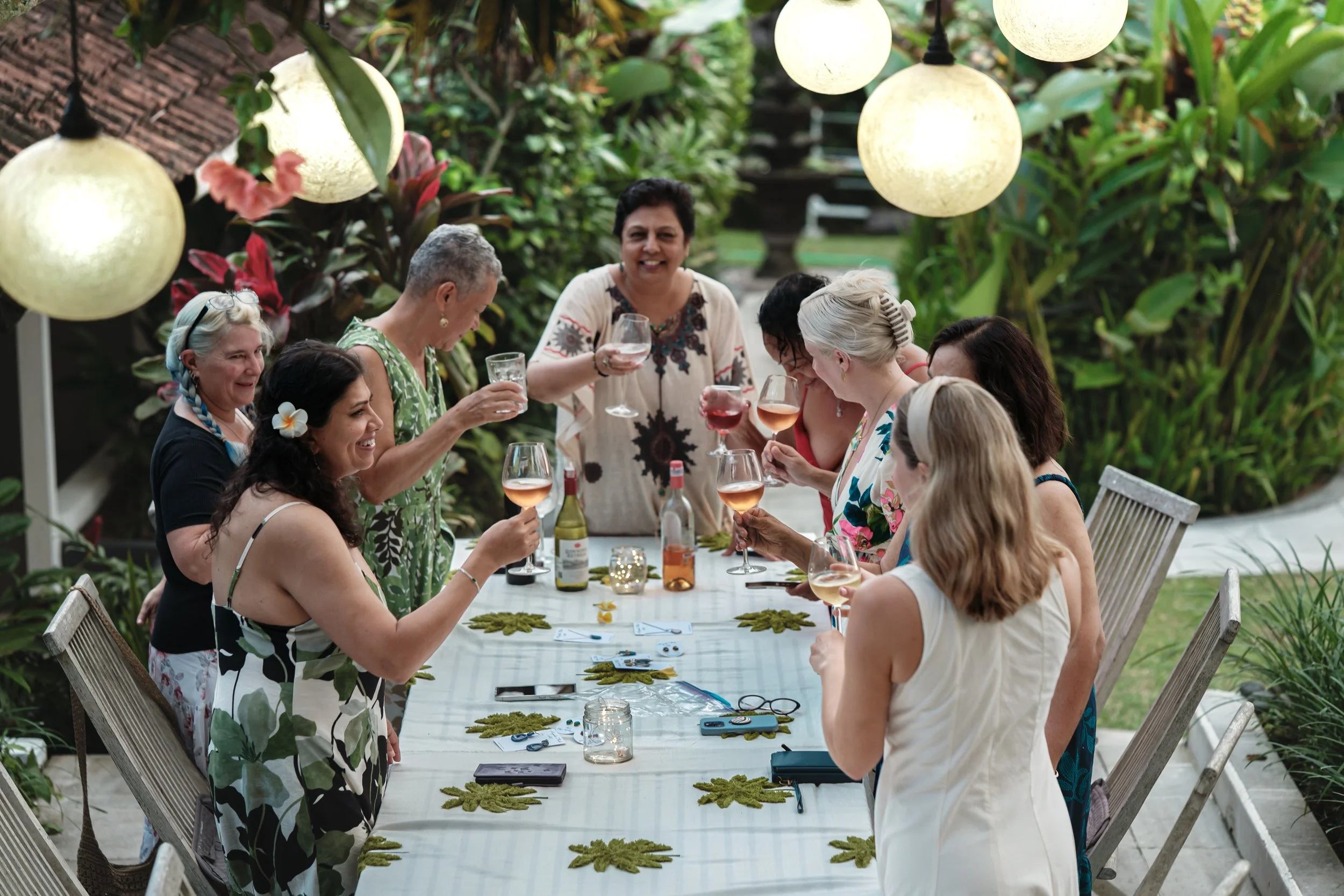
People are often scared of introspection, she said, especially in raw phases of life, where being alone with their thoughts feels suffocating. But to Ana, nomadic at heart, “cultivating home is making friends with all those parts.”
Each retreat in Bali centers on making art alongside other women. One day, guests spend three hours collaging from magazine images; the next, they spend three more writing poetry about what they felt while making it. Ana has a special adoration for the way collage brings in the subconscious when creating—and reveals meaning and memory afterwards.
“I’ve seen people crying, reading their poetry, because it’s so personal what they write and the things that they realize about what they created,” she shared.
It’s not always easy to let the art just happen, Ana knows. “Even if people don’t know how to draw, I try to always motivate them to try just to have a different experience… I try to incentivize them to let go of perfection and just draw and sit down and look at things with one level more, one level deeper than they usually would.”
She loves to have them sketch the temples they visit. “When you sit down and sketch something… you slow down, you really look at it… you notice things you didn’t notice before.” The temples anchor them back into the experience of being alive. The art and creativity has no other purpose beyond basking in that very ability.
Many women who attend have built their lives around being helpful to everyone around them. Taking time to make something for no one else seems to distill a precious clarity. Not necessarily a catharsis of what they should do with their lives, but a clarity of closeness—to the natural world, to the self, to community.
Through her retreats, Ana has observed that kind of closeness grows in the same space as rest—the allowance and invitation for thoughts to simply exist at the pace of feeling. A learned lesson from overbooking her first retreat, she now builds rest into every trip. “There is also value in resting and not doing anything,” she reflected.
Stillness can feel uneasy to confront after so much noise—all the honest fears, pains, and doubts grow louder, taking up the extra room, making themselves at home. But I find they change, even soften, with familiarity. And maybe home is where those fears belong in the first place.
“You can make anywhere your home, because the feeling of being at home is an inside job. It's something that comes from inside you,” Ana said. “You can feel foreign even in your own country, like I used to… Cultivating that feeling of home inside of me, and being comfortable with myself, with my thoughts, even the more complicated thoughts, making friends with my own internal life, I think that's home for me.”
