

The Past Presents: GuerillaGarden
Interviewed by Kaia Stallings & Edited by Tommy Clift in 2023.
The Past Presentsis a series highlighting artists fromthe denver undrgound magazine, Worldview’s predecessor. These are some of Jolt’s words directly from the conversation.
My graffiti is a very personal thing. I did it since I was very young. And a big part of me doing graffiti was never rolling around with a bunch of people. I’ve always kind of done my thing by myself. It’s a real lonesome expression, but I love it. It does take me back: those kinds of graffiti missions, walking down train tracks. I literally have flashbacks to when I was like 12-13 years old walking down the train tracks, sometimes it’s the same exact train tracks. These are some of the only things of the city that haven’t changed. So it takes me back to a place in time; graffiti kind of holds this youthful thing for me. I ain’t out there really expressing that in front of people. That’s a personal thing, you know?
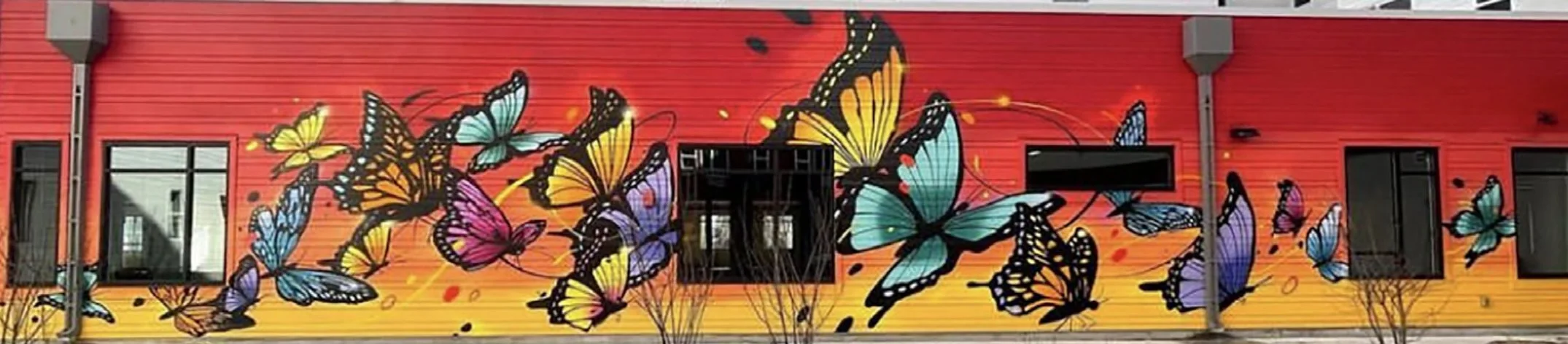
Graffiti-reflected Gentrification:
There have always been professional artists in Denver, but there haven’t always been professional artists that use aerosol. I’ve worked as a professional artist for over 20 years here in Colorado, mainly in Denver. It wasn’t until about a decade ago that it became a big thing.
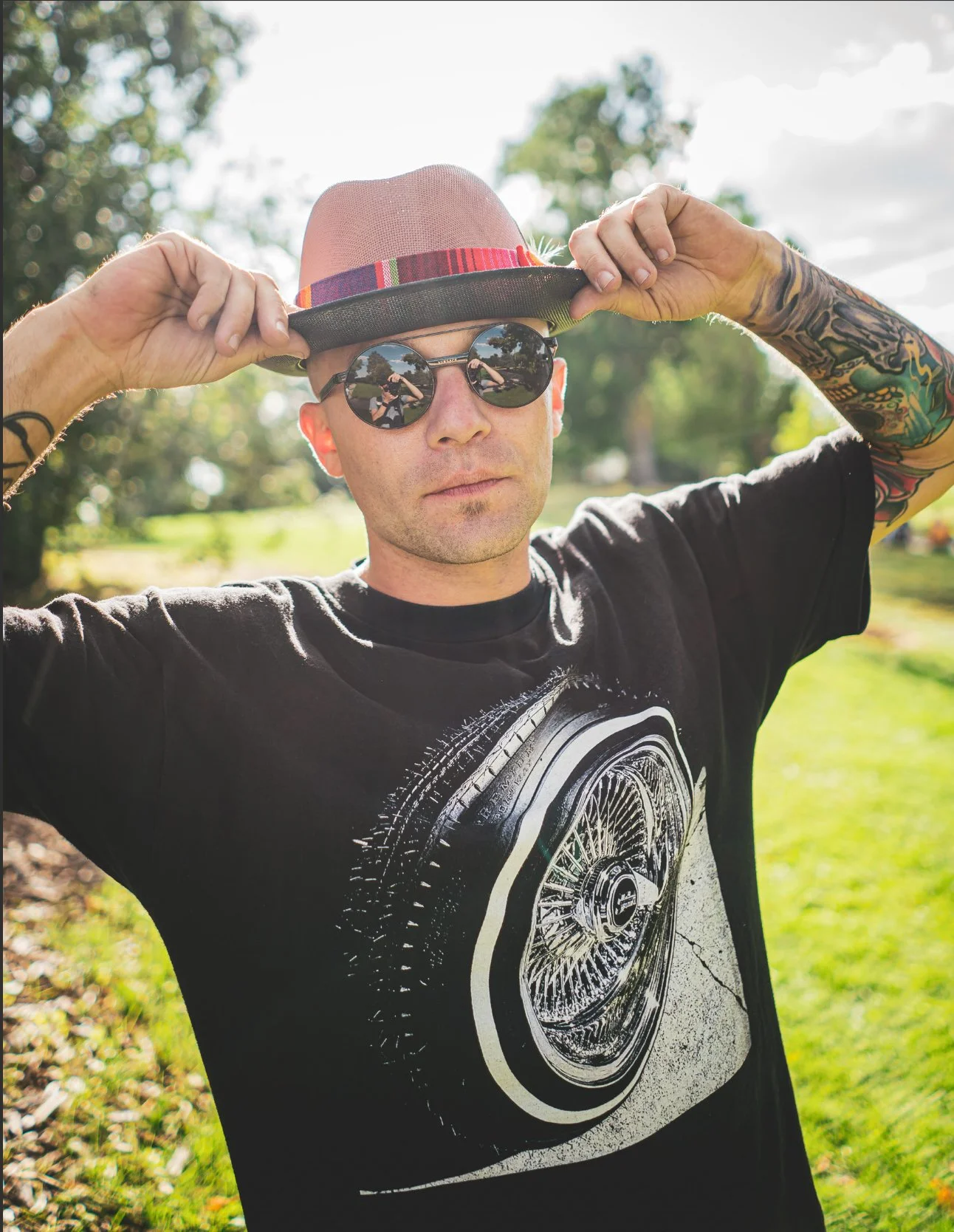
I read some article that said the average “street artist” makes like $40,000, and Denver Colorado is one of the best places to live to be a street artist. That’s crazy. Because I’m from the streets. Like, where’d all these street artists—where’d they come from? They didn’t come from anywhere around where I was. [They] weren’t painting the streets until they got gentrified. The RiNo Art District pretty much fully being gentrified with street art [was] a catalyst. And along with that came street-art fairs that started to pop up all over. Everything just changed around that, like the art of producing with aerosol.
Because I’m coming up on the early 90s-era graffiti culture, mixed with the 1960s-era Chicano movement, so art in the streets, to me, is like a form of that. Not necessarily, you know, young Anglo art students who brought their artwork to the streets, instead of it kind of being born out of the inner city. Denver is gentrified. You’re more likely to find a hood that has been gentrified than one that hasn’t.
Now you see a lot of young Caucasians trying to be a part of this urban culture, but now it’s just kind of across the board just anybody really picks it up. The RiNo Art District: there’s not really a lot of these artists even living in that area. A lot of these people have moved here for the tech industry or started breweries and things like that. This is a very expensive community now. The culture of whatever street art came to be is something that is just so commercialized and so a whole other beast unto itself now.
There were still pockets that were reminiscent of the culture of Denver; now it’s gone. It’s completely eradicated. There might be some people of color there, some cats that moved from Philly or the East Coast or something like that, and they live there. But I guarantee you the landlords are white to them properties. I don’t think that no Black or brown people that historically were the occupants of that community own property. You know, the walls that are being painted are owned definitely by white folks... The way the story was told is the artists painted on the wall. So I grew up with the culture of that being there, that tradition of the community—I just knew that. This is where our history is written on the walls. This is where we can look to get a reflection of ourselves. Pride. There’s a whole lot of artists that were a part of that movement that had art on the walls when I was growing up. Now, a lot of those murals are gone. They’re long gone.
The murals were embedded in the culture, you know? The story is getting rewritten. That’s just part of the course with colonizing, you know, is the eraser of the story, re-changing the art, making Jesus white. That’s just always what has happened. Now it’s to the point where it’s like, there are artists of color participating in that now, just for an opportunity to paint the walls in the happening area in the city coming through with no awareness of what that community was beforehand. It’s to the point now where Denver is kind of done... unrecognizable. I’ve since moved out of Denver, which is crazy because I stayed in the hood for 40 years. I lived in every neighborhood in Denver. Before I left Denver, I definitely made sure to try to play a part in parks being built and things like that. But I don’t find it to be the same city that it was…
READ HIS FULL STORY IN TDU’S ‘LATINX: DE AQUÍ Y DE ALLÁ’
