

Love as Co-Creation – Samiyah and Zoid's Love Story
Written by Stephanie Sika
Surrounded by family, friends, mentors, and the community that had witnessed their growth, Zoid stepped into the final act of his MFA thesis exhibition. Months of planning, years of artistic work, and an old hymn he'd practiced in secret all led to a single moment. When he dropped to one knee and asked Samiyah to marry him, the proposal felt less like an interruption to the exhibition than its culmination—a work of art about love, legacy, and the future they were building together.
For the couple, both professional artists, creativity and partnership have never existed separately. Their relationship, they say, has always been an act of co-creation.
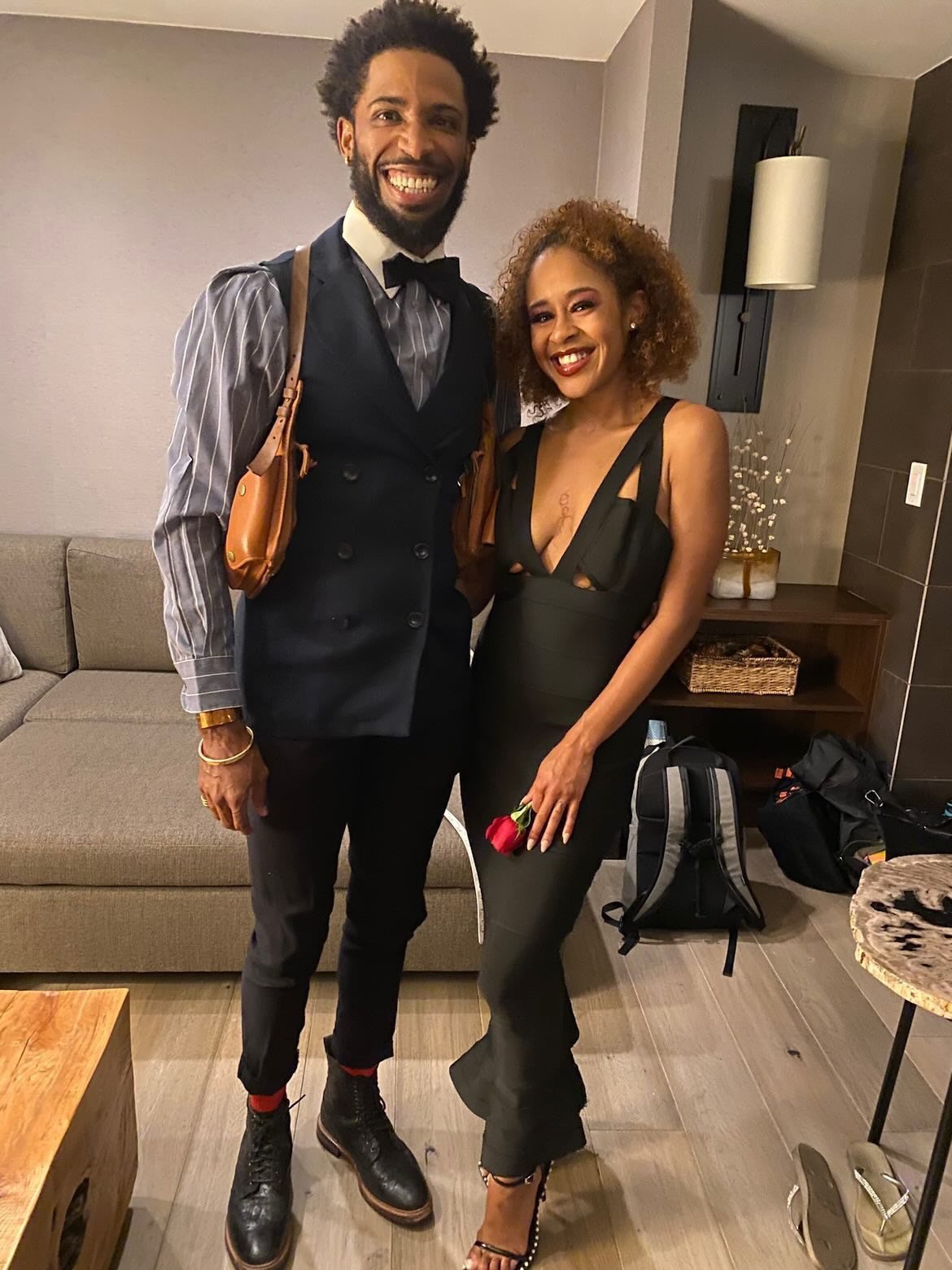
The Meeting
It was the 2021 celebration of Juneteenth in Denver.
The city was still finding its way back to itself after months of isolation. Music spilled through the streets. Friends reunited. Community gathered in celebration.
Samiyah wasn't expecting to meet anyone.
A close friend had spent the day trying to convince her to talk to someone. She wasn't interested. At least, not until they stepped outside.
"There he is," her friend said, pointing across the crowd.
Samiyah looked up.
"Who is this fine man?" she remembered thinking.
Just moments before, she had every intention of brushing off the introduction. Now she was rewriting the script in real time.
The conversation itself wasn't particularly remarkable. In fact, she barely spoke. Her friend and Zoid carried most of the exchange while she stood nearby, feeling unexpectedly shy.
But something about the encounter lingered.
For Zoid, the feeling was stranger still.
"When I first saw her face," he recalled, "it was like, 'I know you. I know this face.'"
At the time, neither of them could explain it.
They exchanged Instagram handles. Made plans to see each other again.
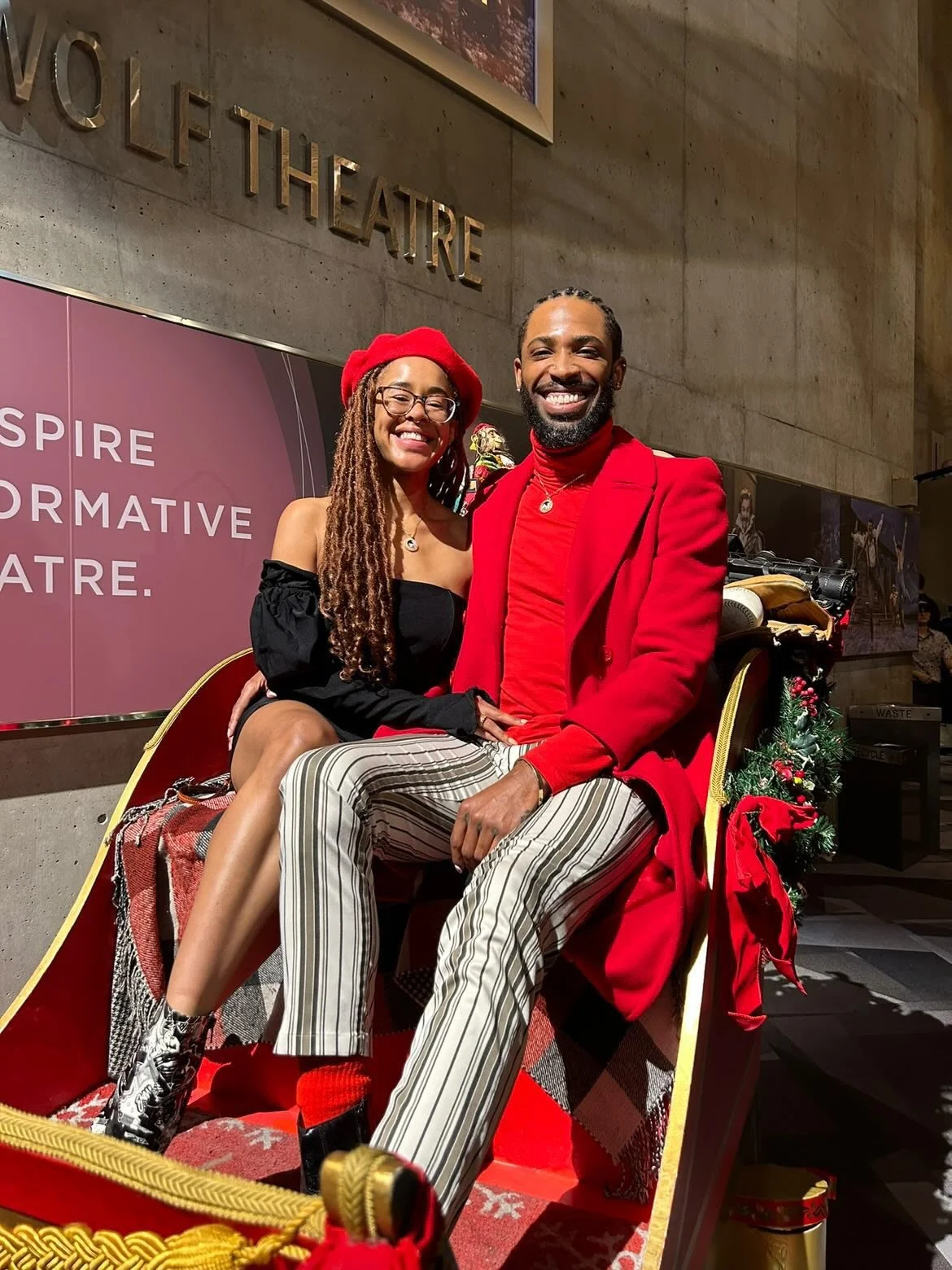
‘A Christmas Carol’
Learning Each Other's Language
Zoid and Samiyah’s first date happened over FaceTime.
COVID had interrupted plans before they could even begin. After a possible exposure through his thesis advisor, Zoid worried that canceling would sound like an excuse. Instead, they improvised. They ordered dinner. Poured wine. Dressed up anyway.
What could have felt disappointing became its own kind of intimacy.
Years later, they still laugh about the chicken–Samiyah had mentioned how much she loved it, and Denver happened to be in the middle of a chicken shortage. Zoid managed to find some and sent it her way. According to him, that's how she ended up with access to his DoorDash account for the next six years.
But somewhere between the jokes and the meals, they began learning each other's language.
At first, what drew them together seemed obvious. Samiyah thought he was handsome, stylish, unlike anyone she had met before. Zoid was captivated by her presence immediately.
Yet attraction quickly gave way to fascination.
"When she started talking," he recalled, "I was like, oh, she's a nerd."
Not in the dismissive way people often use the word, but as a compliment. Everyone else seemed concerned with being cool. Samiyah wasn't. She was goofy. Curious. A little weird. Entirely herself.
And then there were the scars.
As a dancer, her body carried evidence of years spent in pursuit of mastery. The marks on her legs told stories he hadn't yet heard.
"I was like, she gotta be doing something crazy."
She was.
What he would eventually discover was that dance wasn't simply something she did. It was a way of moving through the world.
Likewise, visual art wasn't simply what Zoid made. It was how he thought.
Over time, they began translating one another.
Samiyah taught him that art lives in practice. Watching her spend hours in the studio, returning to the same movement again and again, challenged his tendency to remain inside his head. Inspiration alone wasn't enough. Art required discipline.
Zoid taught her that curiosity has no finish line. No matter how much he already knew about a subject, he continued researching, questioning, and digging deeper. He reminded her that mastery and learning were not opposites but companions.
Slowly, almost without realizing it, they became students of each other.
The Artwork
By the time the proposal happened, it had already been years in the making.
Not because of elaborate plans or secret ring shopping, though there was plenty of both.
Because long before Zoid ever got down on one knee, he had already decided.
He remembers a photograph from around their first anniversary. Looking at the image later, he realized something.

"I could do this forever."
The certainty startled him.
From there, the future became less about deciding and more about preparation.
Samiyah, meanwhile, maintained a simple policy: she wasn't interested in becoming a forever girlfriend. Over time, she sent him screenshots of rings she loved. Something distinctive. Something that felt like her. Then she forgot about it.
Zoid didn't.
Months before the proposal, he quietly tracked down the exact ring she wanted.
The proposal itself became intertwined with his MFA thesis exhibition.
In many ways, the exhibition was already about legacy. About descendants. About imagining futures beyond himself.
As he developed the work, another realization emerged.
If the project was ultimately about the people who would come after him, then it was also about the person he wanted to build that future with.
The proposal wasn't separate from the artwork.
It was the artwork.
Weeks before the exhibition, he coordinated family members, mentors, friends, and community members. Calls were made. Plans were adjusted. Secrets were protected.
Samiyah noticed people acting strangely but couldn't quite figure out why.
An aunt reminded her to get her nails done.
Friends suddenly became vague.
Her grandmother refused to answer certain questions.
Everybody knew something.
Everybody except her.
On the day of the exhibition, surrounded by the community that had helped shape them both, Zoid performed a song he had practiced for months.
When he finally knelt and asked her to marry him, the room erupted.
Family. Friends. Mentors. Elders. Chosen family.
A chorus of witnesses.
Looking back, it feels fitting that their engagement happened this way.
Not in isolation.
Not hidden away from the world.
But in community.
Because their story had never belonged solely to the two of them.
It had always been held by many hands.
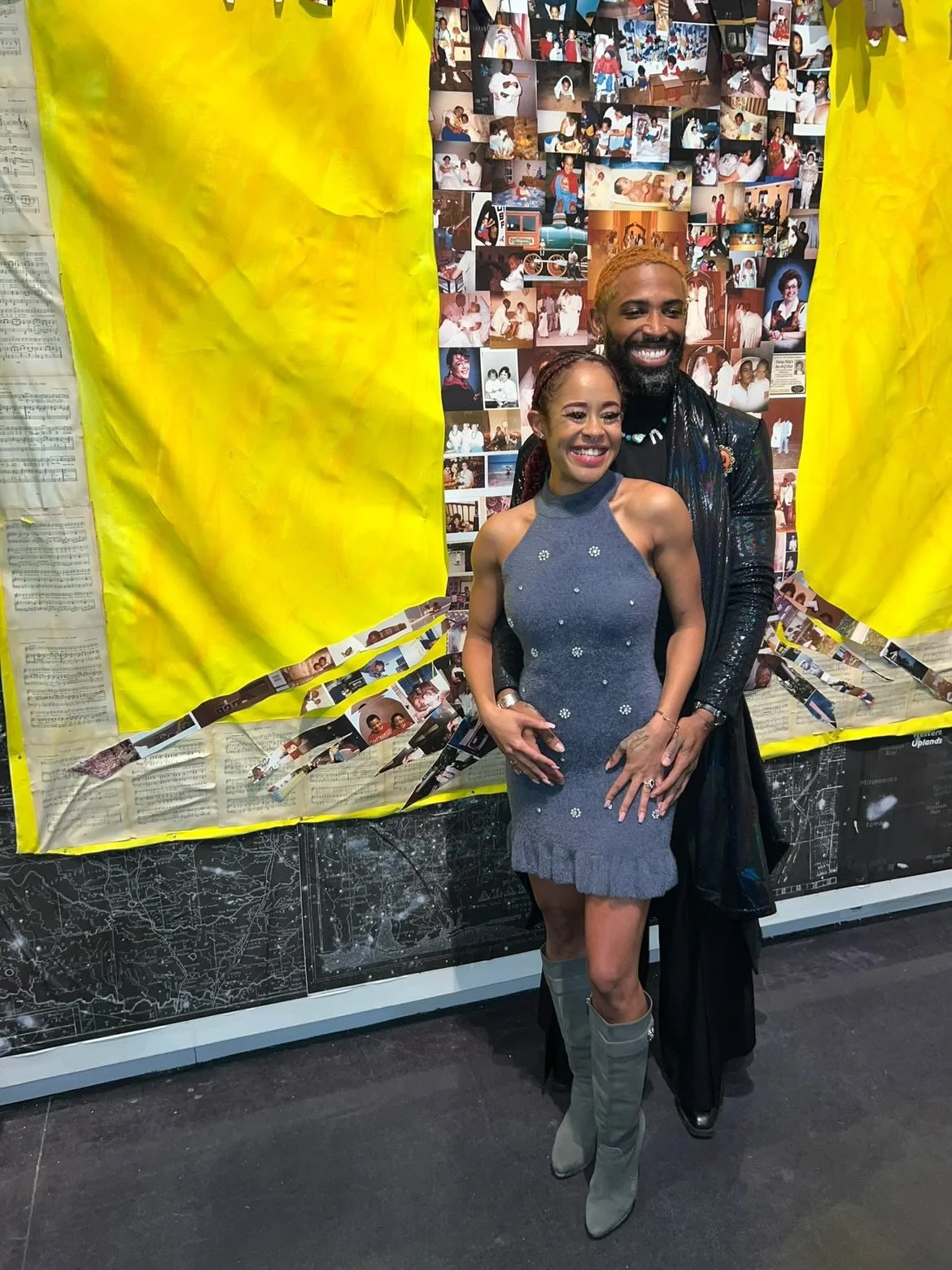
Samiya and Zoid at their engagement (2024).
Toward the end of our conversation, I asked them what success looks like.
Not success in art.
Not success in marriage.
Just success.
Neither mentioned awards.
Neither talked about money.
Instead, they start talking about each other.
About watching.
About witnessing.
About being present.
For Samiyah, success looks a lot like growing old.
Not in the abstract.
Not as some distant idea.
Specifically. Together.
"I can't wait until we're eighty," she said.
Laughing about the same stories.
Telling the same jokes.
Watching the lives they've built unfold around them.
The answer feels fitting.
After all, so much of their relationship has been built on allowing each other room to become.
Room to dance.
Room to paint.
Room to move cities.
Room to change.
Room to dream bigger.
For Zoid, success isn't measured by the outcome.
It's measured by the commitment.
The willingness to stay in the process.
To keep choosing.
To keep building.
To keep showing up.
He talks about sacrifice, but not in the way people usually do.
Not as loss.
Not as keeping score.
Not as giving something up.
Instead, as trust.
The kind of trust that allows one person to say, "Go."
Take the opportunity.
Move across the country.
Follow the art.
I'll be there.
The marriage isn't replacing the dream.
It's creating more room for it.
Maybe that's why neither of them describes love as a feeling.
Not really.
They describe it as a practice.
A collaboration.
A co-creation.
Something made through effort.
Through honesty.
Through showing up as yourself and allowing someone else to do the same.
Years after a friend pointed across a Juneteenth crowd and introduced two strangers, they're still doing exactly that.
Still learning each other.
Still supporting each other.
Still witnessing who the other is becoming.
The wedding will come.
The vows will be spoken.
The broom will be jumped.
And then, the next morning, the real work will continue.
The same work they've been practicing since the beginning.
Making a life.
Making art.
Making room for one another.
Together.
