

The Past Presents: Colter Armstrong
Interviewed & Edited by Tommy Clift in 2022.
The Past Presentsis a series highlighting artists from the denver undergound magazine, Worldview’s predecessor. These are some of Colter’s words directly from the conversation.
My grandma had a guitar that she couldn’t play anymore when she got sick. She had it in her living room. And I would just jam on it all the time not knowing what I was doing. So my uncle taught me after she passed away, and that just kind of stuck with me forever. Which introduced me to the drag world.
When I moved to Denver, I got roped into a drag band (I guess you would call it). I was working at a dispensary and this drag queen came in and heard that I played guitar. So I’d go over there on my lunch breaks. We would smoke, play music—whatever— have a good time. She was like, “Oh, I’m also a drag queen, let’s put together this band.” So me and my roommate played bass. She sang and played piano, and we would open for drag shows at like Charlie’s and blush and a few bars that aren’t around anymore.
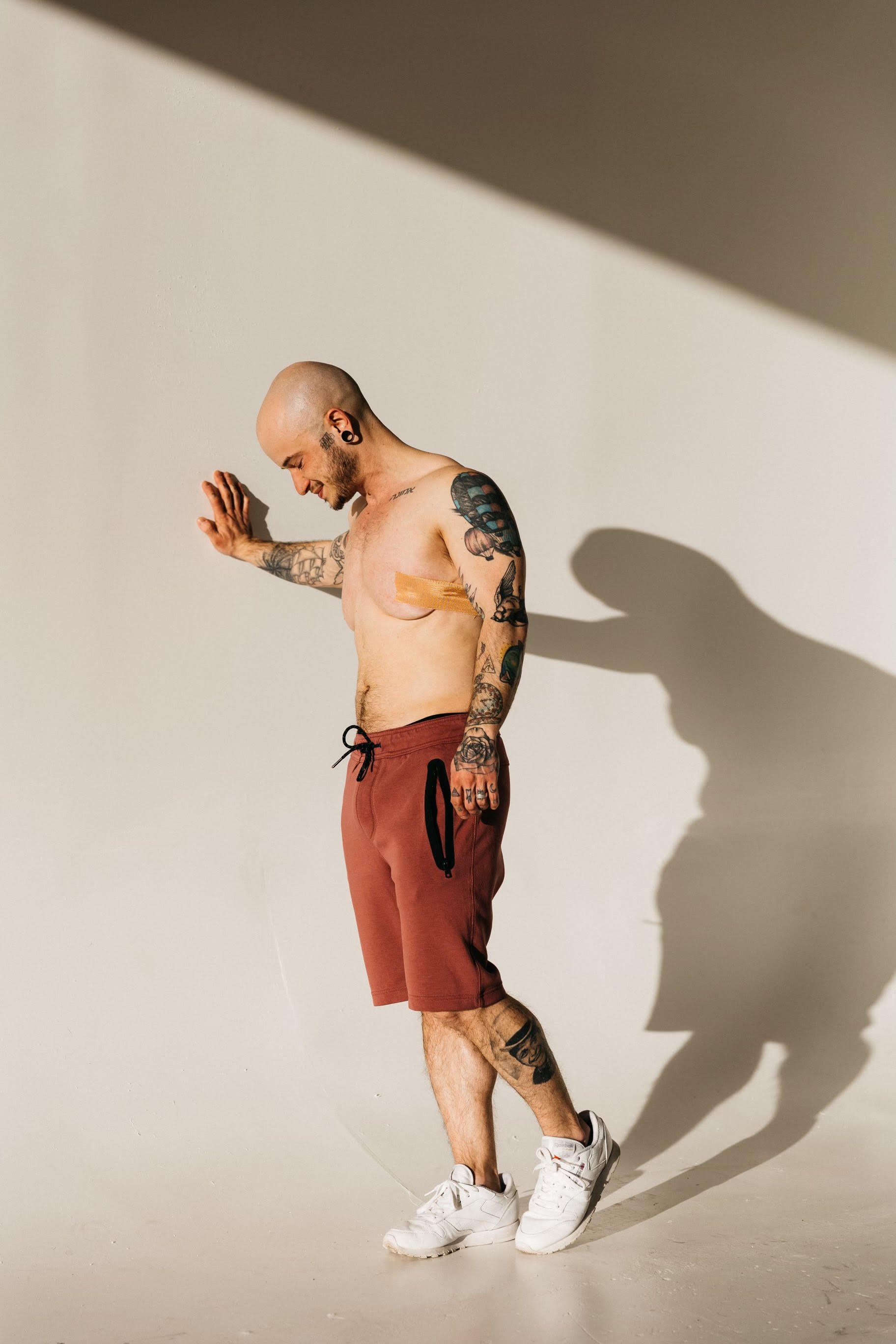
I’m very much a perfectionist in a lot of things that I do, and I’m trying to break that habit, but, you know, being the center of attention wasn’t always my [thing]. As much as drag performers like that, I didn’t get that same feeling, and so, I think a lot of it also has to do with, when you’re trans and performing, and you’re out, trans people view you as one way. You’re pretty much there for like, almost like a sexual content aspect—you know—you’re a fetish. You’re sometimes a token. Like people say “oh, I want to make sure I’m representing each person of a community, I’m not gonna do my research.”
(photo by Jeremiah Corder)
But there’s a bunch of awesome trans performances here in Denver, there’s awesome trans people of color, who are way more interesting to see perform in drag than me. So a big thing in that perfection area for me too was—I could keep trying to be perfect in this role I’m not comfortable with, or I can perfect my art, guitar in some moments, and then I can shine with whoever wants to be that center of attention, right.
I think also, like just being married to a full-time drag performer. My in-drag wife is very much meant to be the center of attention, does it well, and carries herself well and professionally, and I want to make more moments for people to shine in those aspects. So then, you know, focusing on guitar for a bit, taking away my drag time, gave me time with friends who invited me into the tile business, which was, truthfully one of my favorite jobs that I’ve ever had—one of the hardest jobs I’ve ever had—but yeah, definitely one where like, OCD and perfection... it’s not a tick against you.
Coming out of COVID, everybody’s still trying to find their purpose again, or hone in on their skill. But for me, it kind of gave me that freedom to be like, this is your time to figure shit out. Right now the world is slowed down, everybody is kind of doing their own thing. Take advantage of this. While I love doing tile work, it was just too hard to do for long periods of time—on my body—but being able to focus on one project for a little bit of time, it was a very rewarding job, very much so.
But even then, you know, like, my brain is always moving 400 miles an hour. So while we’re sitting there tiling, I’m thinking of different sales pitches and different ways we could grow the business and forgetting to live in the moment and all, and that’s very much kind of how I felt with drag too. I was: this gig was next, that gig was next, this person wants me for this gig. Especially around pride season, it’s always—I could go a whole year without hearing from anybody for any gigs—and then pride comes up and everybody’s like, “Hey, I need Go Go dancers to dance in their underwear and you’re trans. Like, do you want to dance?” (Laughing) Maybe if you would have asked different! But you know, that comes with being out, and it’s not a bad thing. It can get annoying, but it’s not a bad thing if it helps somebody down the line. That’s what this is all about…
